

Can our platform do this? Is this even doable?
Those questions reflected the real technical constraints businesses faced at the time.
Today, the landscape is different.
Composable architectures, cloud platforms, APIs, automation, and AI have removed many of the barriers that once limited digital commerce. Almost any experience can now be designed, integrated, and delivered.
The more important question is:
What should we build, and why?
After more than 20 years in enterprise commerce, one pattern is clear. Projects rarely struggle because the technology cannot deliver. They struggle when strategy, architecture, and execution are not aligned with the business.
Technology is no longer the limit. The decisions around it are.
Modern Commerce Is an Ecosystem, Not a Platform
Organizations still spend significant time searching for the best commerce platform.
But a platform is only one part of the picture.
Modern commerce depends on an ecosystem of connected capabilities. Commerce, content, search, product information, payments, ERP, customer data, AI, and other services all contribute to the customer experience and the operations behind it.
No single platform should be expected to do everything.
We have seen organizations replace their commerce platform expecting transformational results, only to discover that the real challenges were fragmented data, disconnected systems, or inefficient processes. The new platform may have been more capable, but it could not solve problems that existed across the wider ecosystem.
The platform matters. The way the ecosystem works together matters more.
Strategy and Architecture Are the New Competitive Advantage
Selecting the technology is only the beginning.
The decisions that follow will determine how well the business can adapt and grow. How should systems communicate? Where should business logic live? How should data move across the organization? How easily can new capabilities be introduced?
These may appear to be engineering questions, but their impact reaches far beyond technology.
Implementation strategy and architecture influence speed, scalability, operational cost, customer experience, and the ability to respond when business priorities change.
Good architecture creates options. It allows a company to introduce new channels, services, and experiences without rebuilding everything around them.
Poor architecture creates technical debt. Each new initiative becomes slower, more expensive, and harder to maintain.
The strongest architectures are not always the most sophisticated. They are the ones designed around a clear strategy and capable of remaining flexible as the business evolves.
AI Is Only as Good as Your Data
AI is expanding what commerce teams can do, from improving product discovery and personalization to streamlining operations and supporting faster decisions.
But AI is not a strategy.
Its value depends on the foundation behind it.
Without accurate data, connected systems, and clearly defined processes, AI cannot produce reliable outcomes. In many cases, it simply exposes or amplifies problems that already exist.
A recommendation engine cannot compensate for inconsistent product information. An AI assistant cannot provide trustworthy answers without access to the right data. Automation cannot improve a process that has never been properly defined.
The companies creating measurable value with AI are not necessarily using more of it. They are applying it more intentionally.
They begin with a real business problem, establish the right data foundation, and use AI where it can produce a clear and measurable result.
Business Value Comes First
Technology is valuable only when it improves the business.
Every platform decision, integration, customization, or AI initiative should support a meaningful outcome. That may be higher conversion, a better customer experience, simpler operations, lower costs, faster time to market, or easier growth.
If the intended value is unclear, the investment may be adding complexity without solving the right problem.
Successful commerce organizations begin with the business objective. Technology follows.
Experience Turns Possibility Into Reality
Today’s commerce landscape offers more freedom than ever before.
Almost any experience can be designed. Almost any system can be connected. Almost any process can be automated.
But every decision comes with trade-offs.
Speed must be balanced with flexibility. Customization must be balanced with maintainability. Immediate priorities must be considered alongside long-term growth.
There is rarely one universally correct answer. The right decision depends on the organization, its customers, its operating model, and where the business needs to go next.
That is where experience becomes critical.
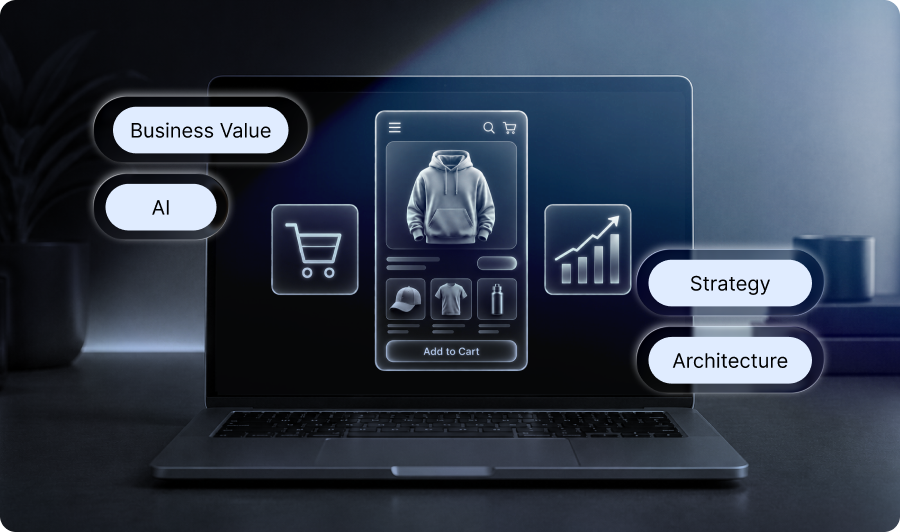
At Mira Commerce, we help enterprise brands make those decisions. We do not begin with trends or technology. We begin with the business, then define the strategy, architecture, and execution required to move it forward.
Because Limitless Ecommerce is not simply about removing technical limitations.
It is about removing business limitations through better decisions, stronger architecture, and disciplined execution.
Almost anything is possible.
The real competitive advantage is knowing what to build, why it matters, and how to build it well.