


At a Glance
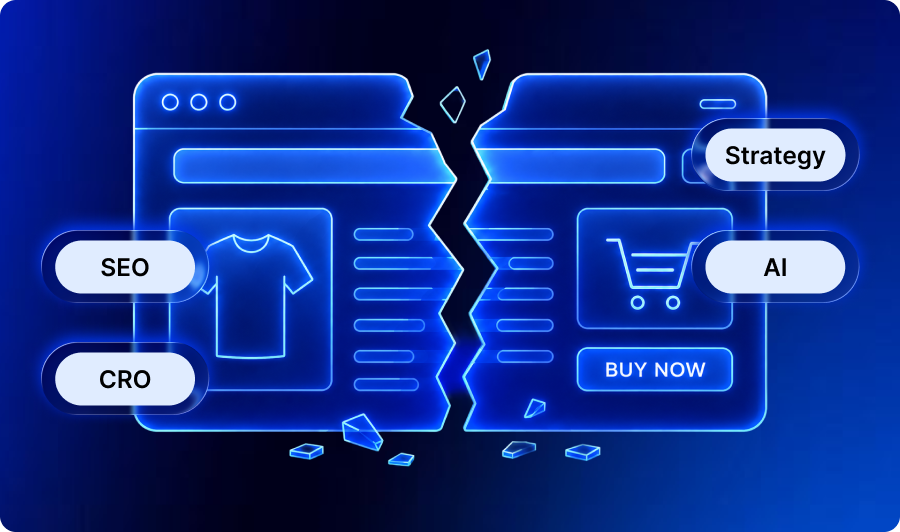
Managing paid search, organic SEO, and conversion optimization in separate silos creates major operational friction. To protect margins, digital commerce brands must view these channels as a single working engine. Paid campaigns uncover hidden, high-converting keyword data to fuel organic content pipelines. In turn, building optimized landing pages lifts engagement metrics, directly lowering your paid cost per click. Simultaneously, updating your technical site architecture captures valuable generative AI search traffic, while systematic conversion optimization prevents qualified visitors from bouncing.
The Paid-Organic Halo Effect
Paid search campaigns do not operate in a vacuum. They actively stimulate organic traffic performance. When we look at search holistically, paid media serves as the exploratory laboratory for organic strategy.
Paid search provides granular keyword conversion data that traditional SEO analytics obscure. Transitioning high-converting paid search queries into the organic SEO pipeline allows teams to build targeted content based on proven revenue metrics rather than speculative search volume. Combining paid text ads and organic search data allows teams to identify keyword gaps and build a holistic view of total search performance, moving past the common pitfalls of why keyword strategies fail when channels operate blindly.
Leveraging paid search data is a foundational step for precise organic keyword research. This approach allows brands to use paid campaigns to capture broad, competitive generic terms in the short term, while simultaneously deploying organic search to solidify deep brand authority over time. This visibility eventually drives a secondary wave of branded organic searches later in the consumer buying journey, proving that paid spend yields organic dividends.
How User Experience Lowers Paid Acquisition Costs
The connection between paid acquisition and user experience is direct and financial. Many brands treat conversion rate optimization as a post-click concern, but search engines factor landing page quality directly into the ad auction itself.
When paid campaigns direct traffic to well-tested, highly relevant landing pages, user engagement signals improve. Search platforms track these interactions through quality metrics, where the landing page experience accounts for a significant portion of the entire visibility score. An above-average rating tells the platform that your storefront is highly relevant to the query.
The financial reward for this relevance is a direct discount on your cost per click. By improving the on-page experience, the same ad budget buys more traffic. Conversely, a poor landing page experience acts as an invisible tax, forcing you to pay a premium for every visitor just to maintain your ad placement against competitors with better optimized stacks.
Adapting to Generative Discovery
The search environment is changing rapidly with the rise of Answer Engine Optimization and Generative Engine Optimization. Traditional top of funnel informational search traffic is steadily migrating toward Large Language Models like ChatGPT, Claude, and Google AI Overviews. This shift means brands must rethink how they attract the invisible customer by intentionally optimizing for AI agents that browse and recommend products autonomously.
With more than half of global consumers interacting with AI platforms every single week and a rapidly increasing portion actively purchasing recommended products, contextual optimization for these models is a necessity.
While zero-click searches reduce traditional organic blog traffic, traffic originating from LLM citations converts at a significantly higher rate. AI-referred visitors demonstrate stronger purchase intent because the AI interface has already consolidated the research and discovery phases for them. Traffic originating from large language model citations routinely converts at a multiple of traditional search traffic, primarily because the interface settles the research phase before the user ever arrives.
To capture this high-converting traffic, we must look at how these engines gather information. The foundation of Generative Engine Optimization is not a radical departure from traditional practices, it is rooted deeply in technical SEO. LLMs rely on the exact same fundamental site hygiene that search bots have required for years, but the stakes are now much higher.
Optimizing for AI discovery means doubling down on core technical pillars. Crawlability is the absolute baseline, if an AI crawler cannot efficiently navigate your architecture, your products do not exist to the model. This technical layer clarifies why great content fails to appear in search platforms and generative engines alike when baseline site hygiene is ignored.
Structuring that information is where the technical layer becomes visible. Implementing comprehensive schema markup ensures that data points like pricing, stock availability, and global trade item numbers are explicitly defined. This structured data builds the necessary context for semantic search, allowing engines to understand the true intent behind conversational, long tail user queries rather than just matching keywords. By refining these critical SEO aspects, you establish a digital storefront that human users can find and AI models can confidently cite.
CRO: The Revenue Multiplier
Driving traffic through paid channels, SEO, or GEO is highly inefficient without a strict conversion rate optimization framework. If the destination fails the user, the acquisition budget spent to get them there becomes completely irrelevant.
When conversion optimization is left out of the broader search ecosystem, acquisition pipelines break down. Paid traffic acceleration fails to yield long term return on investment unless it is intentionally paired with a tailored user experience. For organic channels, a high volume of traffic means very little if the on-page experience fails to match the original intent of the search query. Even pre-qualified buyers coming from AI engine citations will quickly abandon a frustrating checkout flow, which highlights the underlying friction behind why customers cannot find what they want or buy on an unoptimized storefront.
Technical CRO sits at the center of this ecosystem because it serves two distinct audiences simultaneously. Improving mobile optimization, semantic HTML readability, and page load latency satisfies human users looking for a seamless transaction. At the exact same time, it provides clean data structures that search engine bots and AI crawlers need to understand your catalog. An optimized site architecture ensures that traffic acquired from any source converts into measurable revenue rather than turning into a bounce metric.
Moving Beyond Silos
An isolated marketing strategy creates operational inefficiency. Paid search acquires immediate data and visibility, SEO builds long term equity, GEO captures high-intent AI discovery, and CRO secures the transaction while driving down paid acquisition costs. Digital commerce growth requires the simultaneous execution of all four disciplines, treating them not as individual projects, but as a single working strategy.
Review Your Digital Strategy
Maximizing website performance requires total alignment across digital marketing channels and your underlying technical architecture. If you want to identify where your traffic pipeline is losing data, reduce wasted ad spend, or prepare your storefront for AI crawlers, let us look at the data together. Visit our contact page today for a comprehensive review of your digital strategy.




.webp?compression=lossy)
.webp?compression=lossy)