

Is Your Site Indexable? Why Great Content Fails to Appear in Search
Article Summary
Publishing a page is only the first step. Google uses a selective Indexability filter to decide if your content justifies its storage cost. To win, you must move beyond basic crawlability and master the intersection of technical architecture, structural authority, and localized relevance.
In the world of high-scale digital commerce, publishing a page is not a guarantee of visibility. This is a common misconception that can stifle growth. A page can be architected, deployed, and internally linked, yet remain invisible if Google decides it does not meet the qualitative bar for indexation.
If we view Google as a librarian with limited shelf space, we must understand that its role is not just to organize: it is to decide which content is worth the permanent storage cost. At Mira Commerce, we call this the Indexability Gate. Passing it requires a total synergy between your technical infrastructure and your content strategy.
Indexability vs. Crawlability in Enterprise Systems
Many digital teams focus heavily on crawlability (the bot's technical ability to reach a URL) but ignore the indexation layer. Indexability is Google’s qualitative decision to include that page in its database. In complex enterprise environments, this distinction is critical.
Common triggers for indexation rejection include:
Thin or Duplicate Logic: The page fails to provide a unique source of truth.
Conflicting Technical Signals: Canonical mismatches often arise from complex product filtering and URL parameters.
Low Perceived Value: If a page does not resolve a specific user query with depth, Google will treat it as noise.
Internal Linking and the GEO-Signal
Internal linking is the primary way Google prioritizes importance. For brands targeting specific geographic markets, this is where you define your local authority. By connecting localized landing pages to high-authority core nodes, you signal not just what you sell, but where you are the expert.
A robust internal structure ensures that:
Discovery is Efficient: Bots find new content through clear, logical paths.
Authority is Distributed: Equity flows seamlessly from your primary domain to deep-level regional catalogs.
Crawl Depth is Minimized: Every valuable page (global or local) should be reachable within 3 to 4 clicks to avoid becoming an orphan node.
Rendering: The Content Visibility Risk
Modern commerce relies on JavaScript-heavy frameworks that Google processes in two distinct stages. It first reads the raw HTML and subsequently attempts to render the full experience as resources allow. This creates a visibility gap. If your regional pricing, inventory, or contact details are trapped behind a slow-rendering script, they may not be indexed for weeks.
Mira’s Best Practice: Critical content must be present in the initial HTML response. JavaScript should enhance the experience, but it should never be the reason your content fails to exist in the eyes of a search engine.
Managing Index Bloat and Data Orchestration
As commerce sites scale, they often generate thousands of redundant URLs through filters and tracking. Without proper data orchestration, this leads to Index Bloat, where low-quality pages dilute the authority of your high-performers.
Canonical Integrity: In a multi-storefront setup, your canonical tags must be the absolute source of truth to prevent Google from de-indexing important clusters.
Strategic Pruning: Consolidating low-value pages is often more beneficial than adding new ones. A focused index signals a higher level of brand trust and operational maturity.
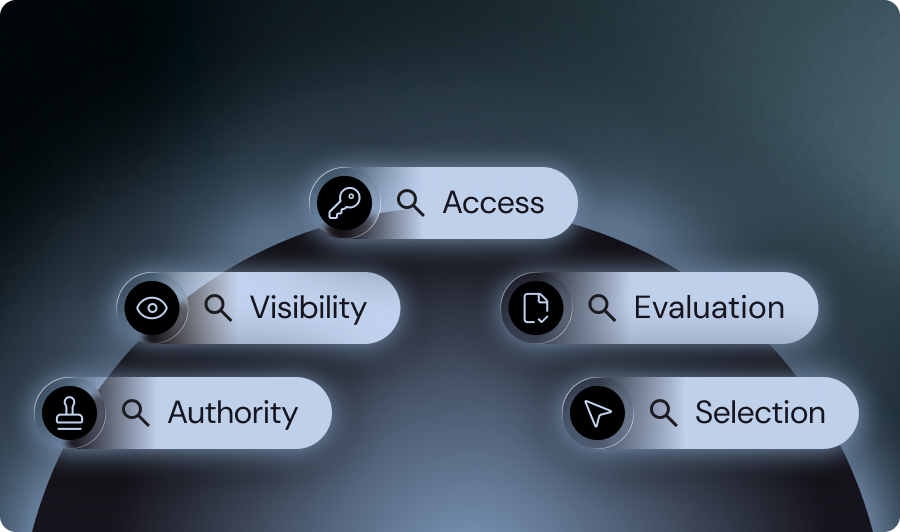
The Core Evaluation Framework
At every stage, Google evaluates whether a page justifies its inclusion based on:
Accessibility: Can the bot physically reach the content?
Clarity: Are your technical signals consistent across the stack?
Relevance: Does the content resolve a specific global or local intent?
Value: Is this page the most authoritative answer for the user?
Modernize Your Visibility with Mira Commerce
If your key product pages are struggling to appear in search or you are failing to capture specific geographic markets, the issue is rarely a simple SEO fix. It is often a symptom of deeper architectural or integration gaps.
At Mira Commerce, we are system integrators who understand the full commerce stack. We specialize in identifying the technical bottlenecks, from rendering failures to complex middleware conflicts, that keep your best content out of the search results.
Take the next step in your commerce evolution:
Related Posts