
Vercel used Ship San Francisco to make one thing clear: it is no longer just the home of fast web frontends or a hosting platform. They want to run your backends, your workers and your AI agents, with the same one-click experience that made Next.js deployments so easy.
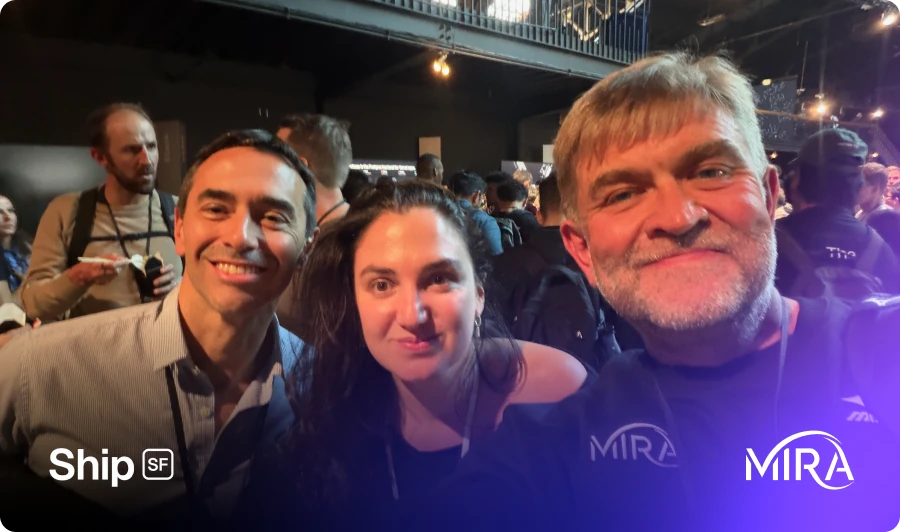
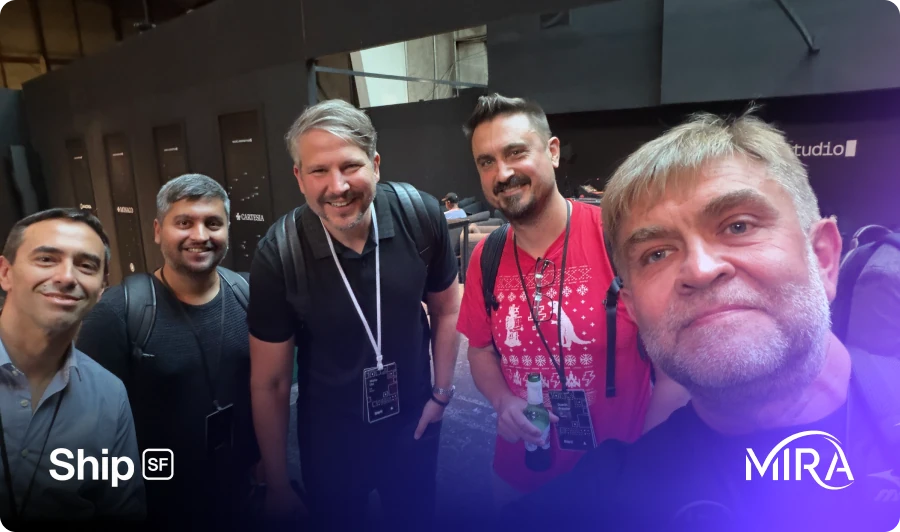
We attended one of the most important industry events of 2026 with Mira CTO, Eduardo De Lisa. As a Vercel Solution Partner agency, we moved brands like Level Nine Sports, Staccato, Destaco and others onto fully headless, Vercel-hosted storefronts; and we went to understand where the platform is heading and what it means for the commerce brands we build for. Here is what we learned:
Vercel is now a backend platform too
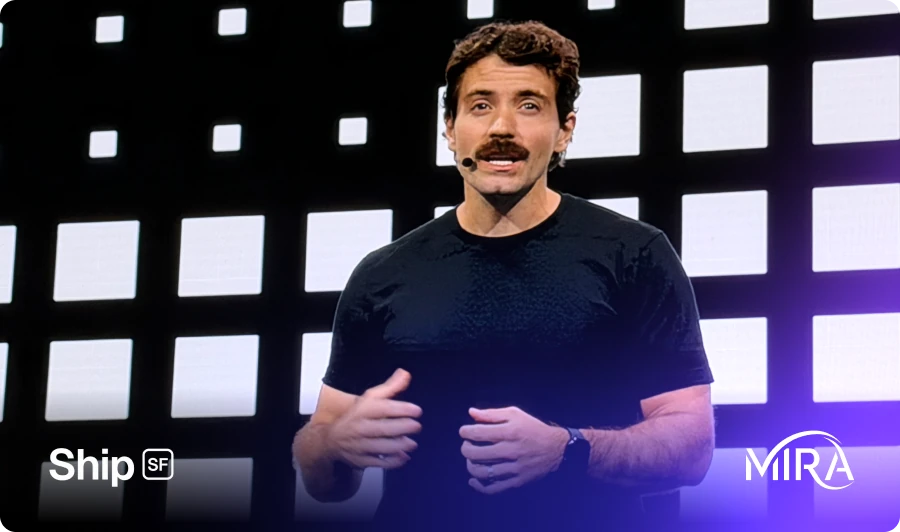
Guillermo Rauch opened by framing Vercel as "the fastest way to deploy anything," and backends were the headline. Three announcements back that up:
- Python is generally available. FastAPI, Flask and Django run on standard CPython with PyPI packages, uv and pyproject.toml. Vercel says 150,000 teams already run Python on the platform.
- Vercel Services deploys a frontend and its backend together, so every pull request gets a live preview of the whole application, not just the storefront.
- Vercel Daemons (public beta) keep always-on workers running without anyone managing servers. Think queue consumers (Celery, BullMQ, RabbitMQ, Kafka), Temporal workers and self-hosted CI runners. Vercel keeps the instance count you set and replaces any that crash.
For commerce teams, this matters more than it sounds. Order sync jobs, ERP and PIM integrations, inventory feeds and pricing workers have traditionally lived on a separate AWS or Heroku setup next to the Vercel storefront. Those pieces can now sit in the same project, with the same previews and the same deployment flow. Solid!
Agents get real infrastructure
The biggest theme of the day was agentic infrastructure. Vercel's pitch is that it is "the best place to deploy agents," and it laid out a full stack for getting them into production:
| Piece | What it gives an agent |
|---|---|
| AI Gateway | One API to hundreds of models, now with budgets per API key, project, person or team, US-only inference and Zero Data Retention |
| Vercel Connect (GA) | 1,000+ secure, scoped integrations to outside tools and data, plus MCP Events (public beta) so agents can react to events from MCP servers |
| Sandbox | An isolated computer of its own for running code; Vercel says more than 100 new sandboxes start every second |
| Vercel Drives (GA for Sandbox) | A persistent workspace, so an agent's code, data and memory survive between runs |
| eve | Vercel's open-source framework for production agents, now with persistent memory across sessions, installable tools and skills, and agent creation and deployment from the Vercel dashboard |
The message was that getting an agent live should take about a minute. Agent workloads are already showing up in Vercel's data: agent-triggered deployments grew 28x in the last 12 months!
The ecosystem on stage reinforced the point. Speakers included leaders from Shopify, Anthropic and Meta, and one of the sessions walked through running Claude Managed Agents on Vercel. The center of gravity has moved from "AI features in a web app" to agents as first-class workloads.
Vercel for Enterprise: everyone ships, safely
Guillermo asked the audience to imagine everyone in a company shipping ideas that fast. Vercel for Enterprise is built around that idea, with governance baked in:
- Anyone can build agents with the tools and models they choose, and every deployment is private by default.
- Token budgets per API and per project keep AI spend visible and capped.
- Bring Your Own Cloud on AWS runs application functions inside the customer's own AWS account, with the Vercel developer experience on top.
- Enterprise-Managed Authorization for Vercel Connect (public beta) lets agents act on employees' behalf through the company's identity provider, without approving every connection one by one.
This is the answer to the question we hear most from Mira’s larger clients: how do we let teams experiment with AI without losing control of data, access and cost?
The numbers that stood out!
Guillermo closed by recalling that Next.js started as "an idea in a folder on my laptop." Ten years later, these are the figures Vercel shared:
| Metric | Figure (per Vercel) |
|---|---|
| Tokens processed | 4 trillion a day |
| Deployments | 1 billion every 4 months |
| AI SDK downloads | 60 million a week |
| Teams running Python on Vercel | 150,000 |
| New sandboxes | 100+ every second |
| Developers on the platform | 3x in 12 months |
| Agent-triggered deployments | 28x in 12 months |
The last two tell the story. Developers are tripling, but agents deploying code are growing almost ten times faster.
What this means for commerce brands
Our takeaway: the headless storefront is now the starting point, not the finish line, and it largely follows what we have been discussing within our MACH Alliance community in the past weeks. Here is how we are thinking about it for our clients.
- One platform for the storefront and the plumbing. With Python, Services and Daemons, integration middleware, catalog jobs and background workers can move next to the storefront. Fewer moving parts means fewer handoffs, cleaner previews and simpler support.
- Agents that do real commerce work. Product content enrichment, catalog QA, customer service triage, B2B quote assistance and merchandising analysis are all practical agent use cases. Connect, Sandbox and Drives give those agents secure access to systems like the ERP, PIM and CRM, plus memory between runs.
- AI with guardrails. Many of the brands we serve, including manufacturers and firearms and tactical brands, work under strict data and compliance expectations. Private-by-default deployments, per-project token budgets, US-only inference and Bring Your Own Cloud on AWS make AI adoption a conversation their IT and legal teams can say yes to.
- Commerce is part of the agent conversation. Vercel's broader Ship series also covered a rebuilt Shopify Hydrogen that works with any framework and Shopify's Catalog API for embedding shopping anywhere. Shopping is moving into agents and new surfaces, and storefronts need to be ready for it. Stay tuned for more on that one!
Where Mira fits
Vercel ended the keynote with a promise to put that power "in the hands of developers like you... with your agents, in your data, and the models you choose." We left the event convinced that the next wave of commerce wins will come from brands that pair a fast storefront with agents working behind it.
As a Vercel Solution Partner, Mira Commerce has spent years building headless, composable storefronts on Vercel for manufacturers, distributors and DTC brands. We are now applying the same discipline to backends and agents: identifying the right first use case, connecting it safely to your systems, and running it in production.
If you are wondering what Vercel's new stack could do for your business, let's talk.
Sergei CEO, Mira Commerce